
Born in Tuscumbia, AL, on June 27.
At the age of 19 months, Helen loses her sight and hearing as a result of meningitis.
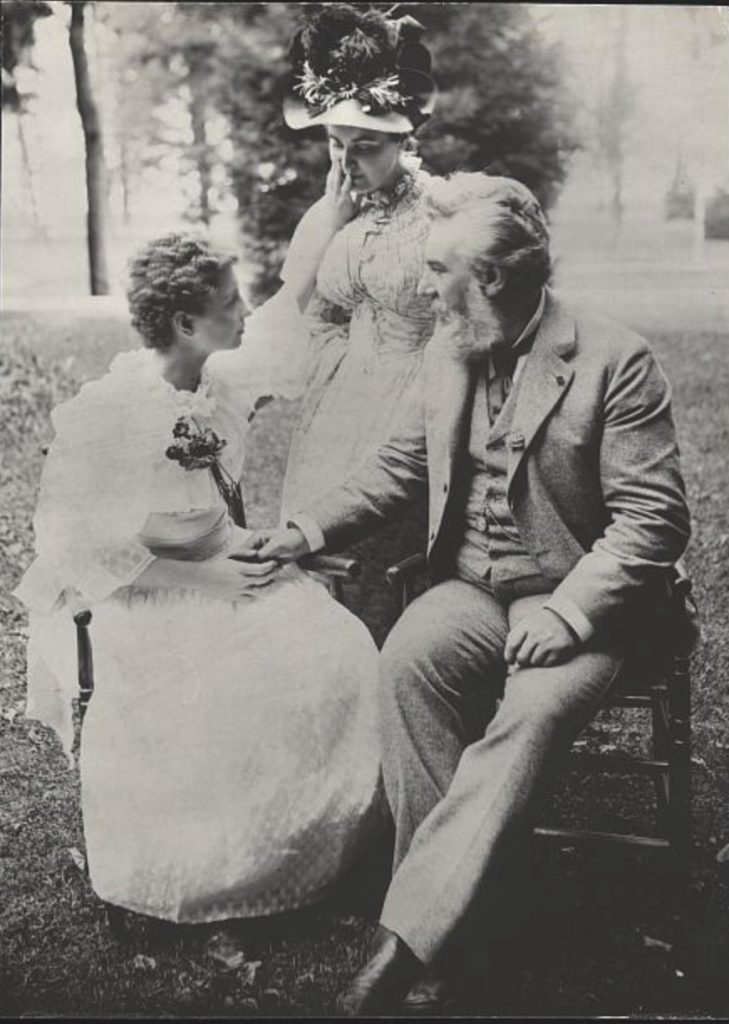
Helen is recognized by Alexander Graham Bell, famous teacher of the deaf and inventor of the telephone, as being exceptionally bright despite her severe sensory loss.
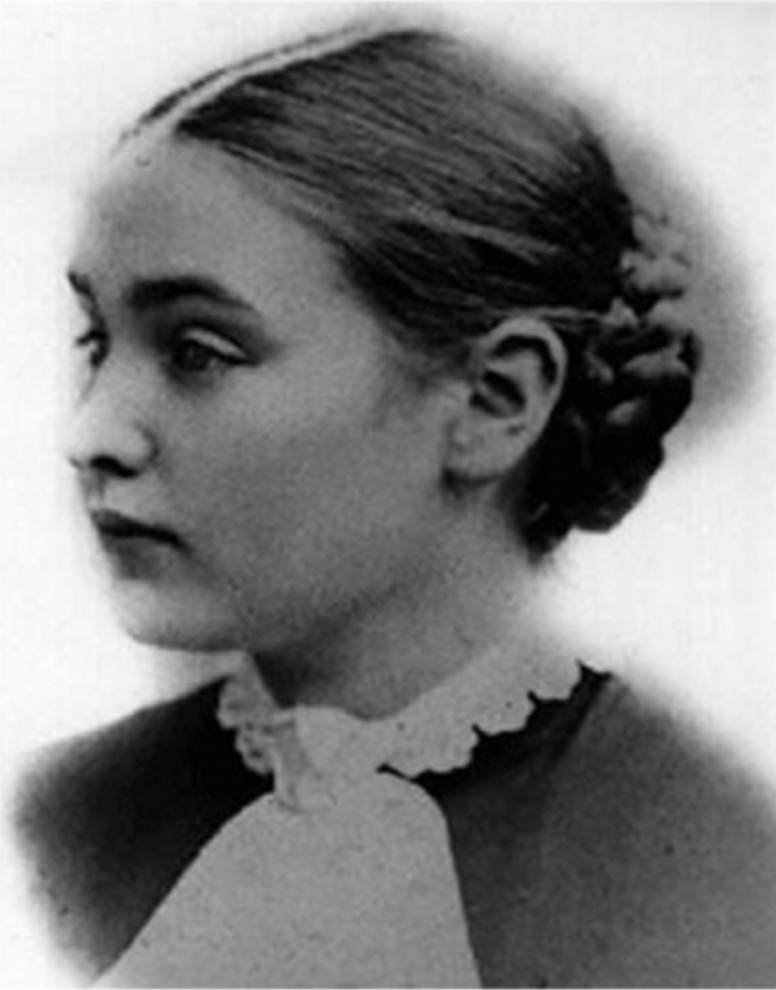
Helen begins instruction, as a result of Alexander Graham Bell’s suggestion, under Annie Sullivan, 20-year-old, partially blind orphan and graduate of Boston’s Perkins Institute for the Deaf and Blind. Helen was liberated from the “double dungeon of darkness and silence” by Sullivan who teaches her that water flowing from a well has a name, W-A-T-E-R. She calls it “my soul’s birthday.”
Helen matures under the instruction of Sullivan, later to be called “The Miracle Worker” by Mark Twain. Her world fame grows even before the era of mass communication. She learns to read and write in Braille.
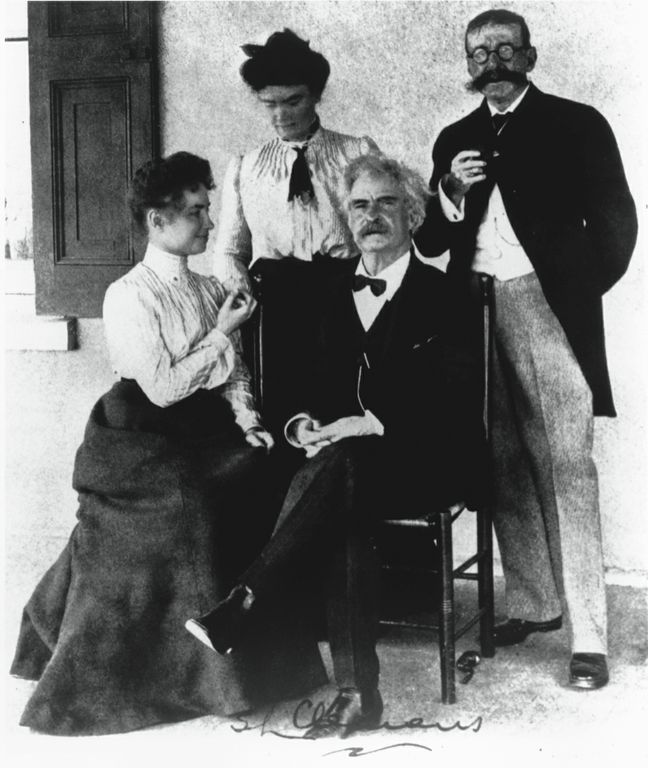
Helen is befriended by Mark Twain. Recognizing Helen’s great intellect and indomitable spirit despite her blindness and deafness, Twain predicts, “Helen Keller will create a fame that will endure in history for centuries. Along her special lines, she is the most extraordinary product of the ages.”
Helen enrolls in Radcliffe College (later, a division of Harvard University) as a regular student. She is aided by Sullivan, who spells lectures into her hand.
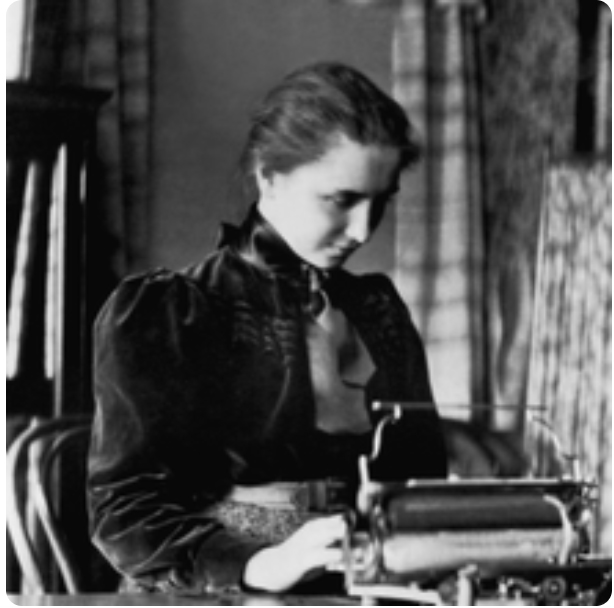
Helen publishes her first book, The Story of My Life, as an effort to satisfy the insatiable interest of people throughout the world in her “miraculous” accomplishments. She becomes the first blind/deaf person to communicate effectively with mankind.
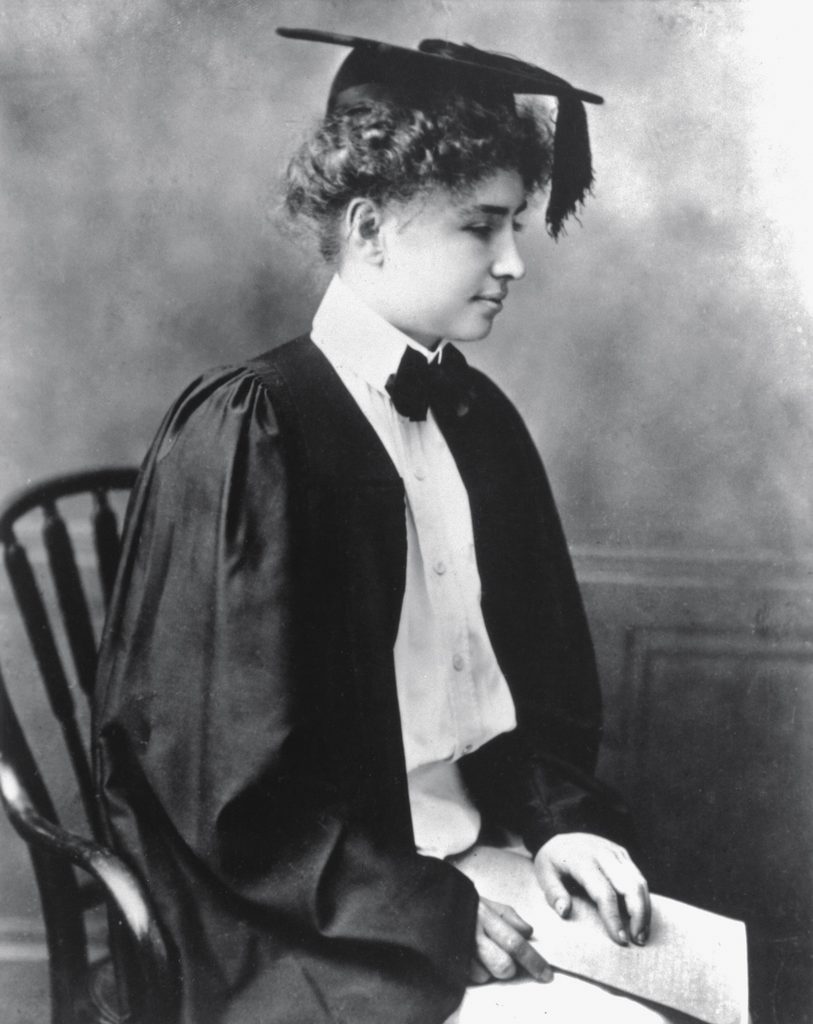
Helen graduates Cum Laude from Radcliffe College. She is the first blind/deaf college graduate. The next blind/deaf person to graduate from college does so 50 years later. She writes, “I shall devote my life to those who suffer from loss of sight.”
Helen publishes The World I Live In.
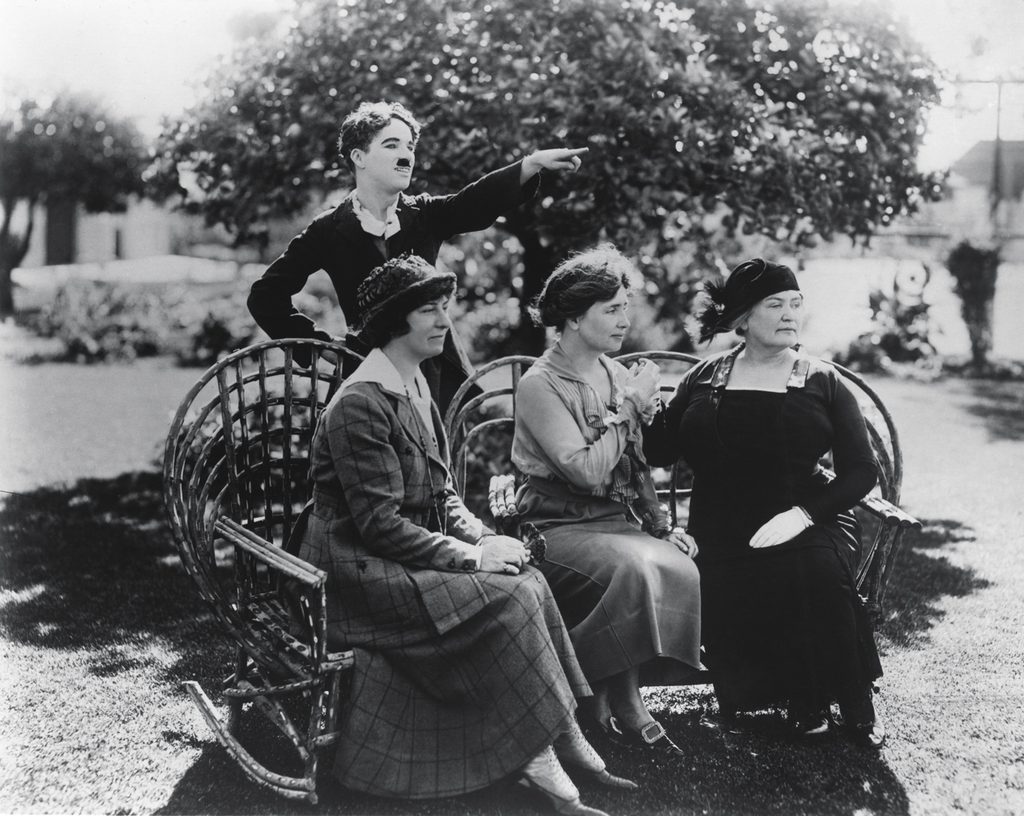
Helen stars in the film Deliverance. She meets Charlie Chaplin, the first of many figures in the entertainment world with whom she will become acquainted, including Enrico Caruso, Mary Pickford, Katharine Cornell, Douglas Fairbanks and Lauritz Melchior.
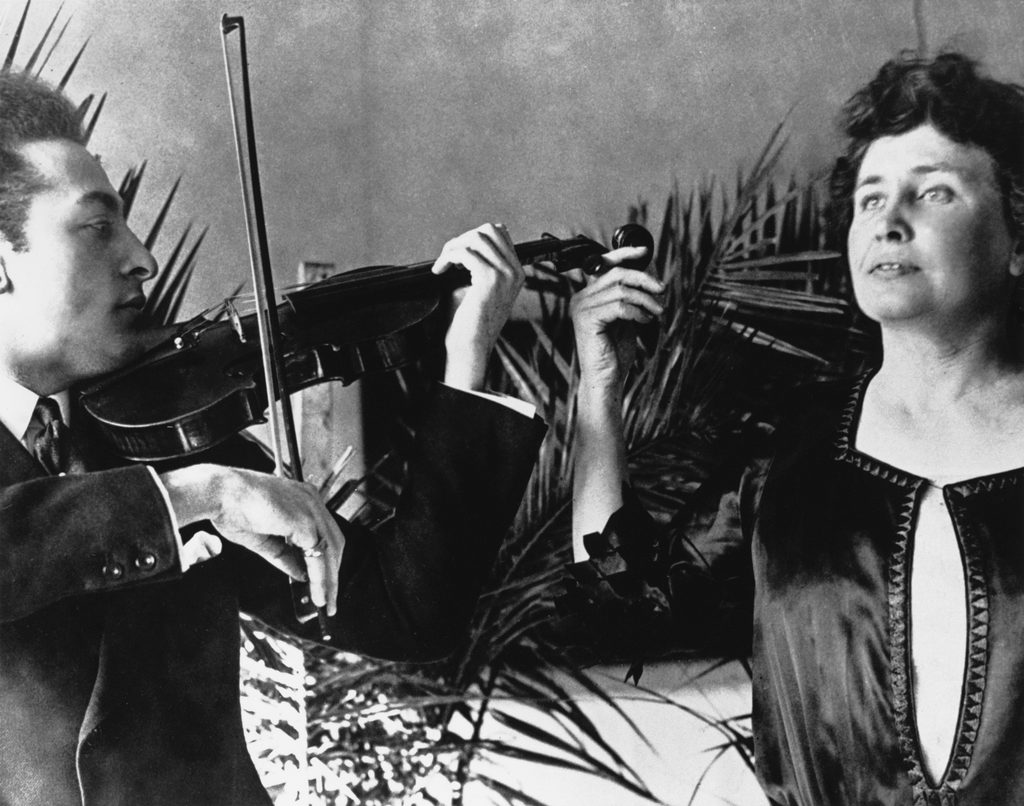
By feeling vibrations of his violin, Helen “listens” to the music of young Jascha Heifetz, who eventually becomes one of the greatest violin virtuosos of the 20th century. Helen can recognize composers. “Each delicate note alighted on my fingertips like thistledown. They touched my face, my hair, like kisses remembered.”
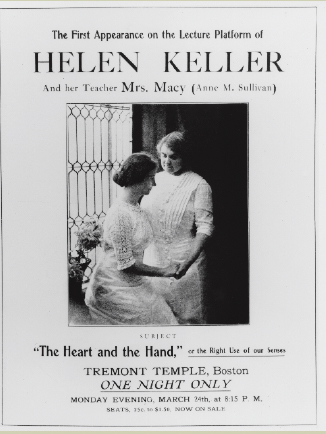
Helen gives lectures and tours in the United States. Her world fame increases.
Helen begins her lifelong work as a counselor on national and international relations for the American Foundation for the Blind. Through Helen, AFB’s profile is raised throughout the United States, and development funds are secured.
Helen successfully challenges Lions International, the world’s largest fraternal organization, to become “knights for the blind in the battle against darkness.” The Lions go on to establish numerous sight-saving programs and eye banks. In 1990, the Lions rededicate themselves to “Sight First.”
Helen publishes My Religion.
Helen publishes Midstream: My Later Life at age 49. She travels for the first time to Europe.
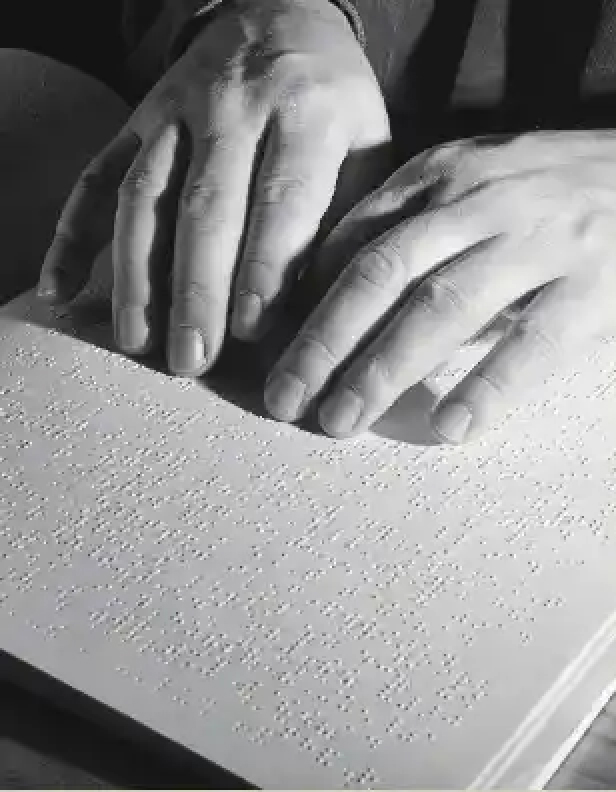
Braille is accepted as the world’s standard alphabet for the blind, thanks largely to Helen’s eloquent pleas for standardization.
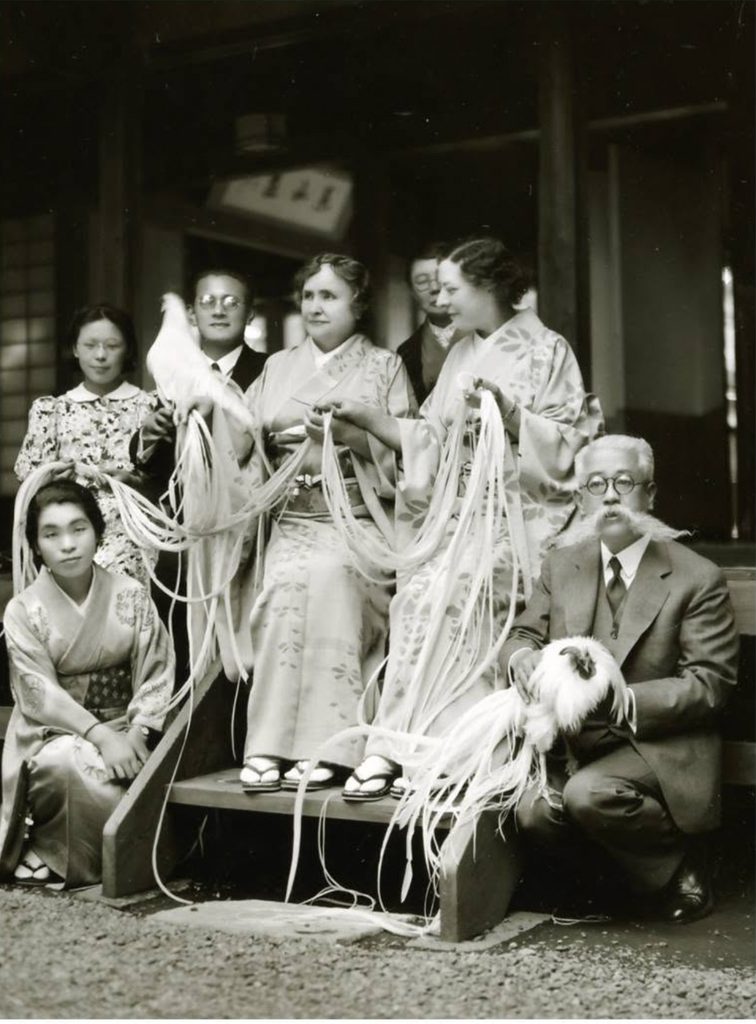
Helen embarks on the first of three tours of Japan, establishing a close friendship with the Japanese people whose culture especially reveres triumph of the mind over bodily infirmity. She gives 97 lectures in 39 cities. “No foreign visitor had ever been accorded such an enthusiastic reception.” (Akita Journal)
Helen publishes Helen Keller’s Journal. She begins a close friendship with Eleanor Roosevelt. Helen meets with President Franklin Delano Roosevelt, who says, “Whatever Helen Keller’s for, I’m for.” She becomes friends with Katharine Cornell, actress.
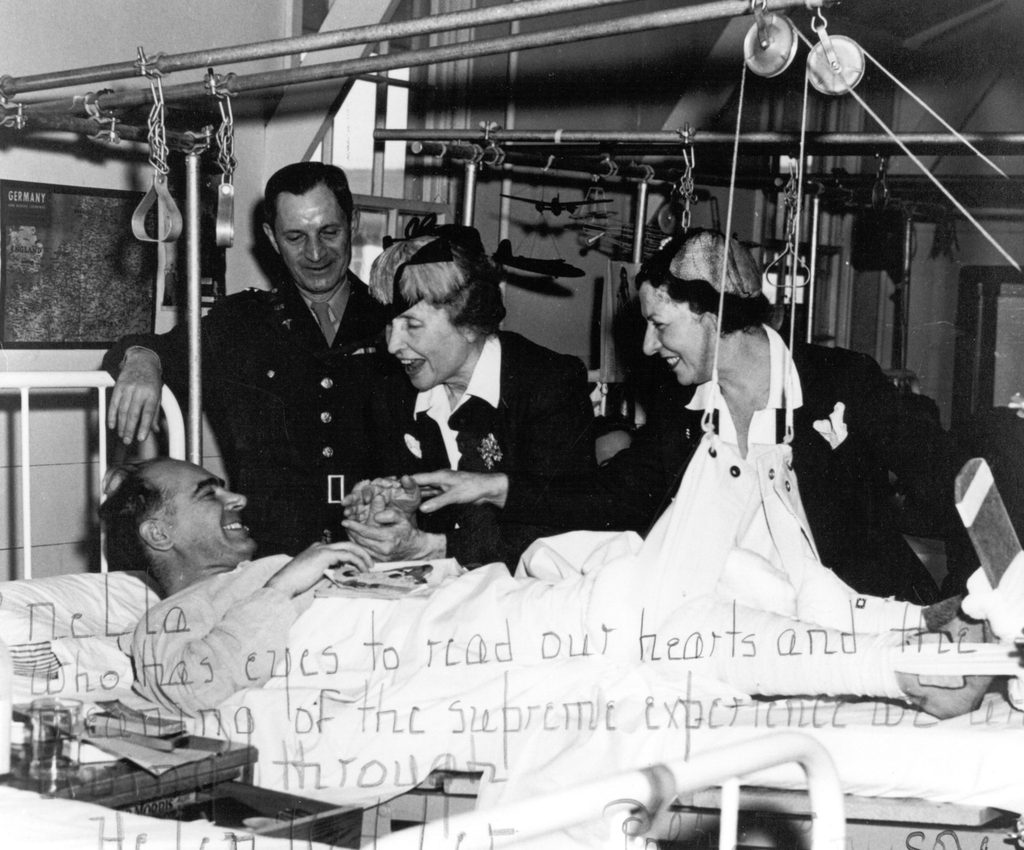
Helen visits military hospitals, calling it “the crowning experience of my life.” “A drop of sweetness stole into my grief over the paralyzed as they tried to put their wasted arms around me, not always successfully, but their wish was a benediction I shall treasure forever.”
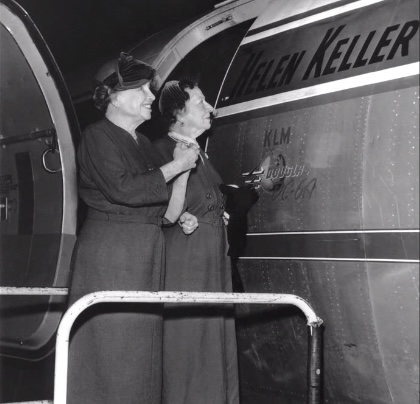
Helen embarks on a world tour on behalf of the handicapped, inspiring governments to begin schools for the blind and deaf. Helen visits 35 countries on five continents between 1946-1957.
Helen becomes a Chevalier of the French Legion in a ceremony commemorating the birth of Louie Braille at the Sorbonne in Paris.
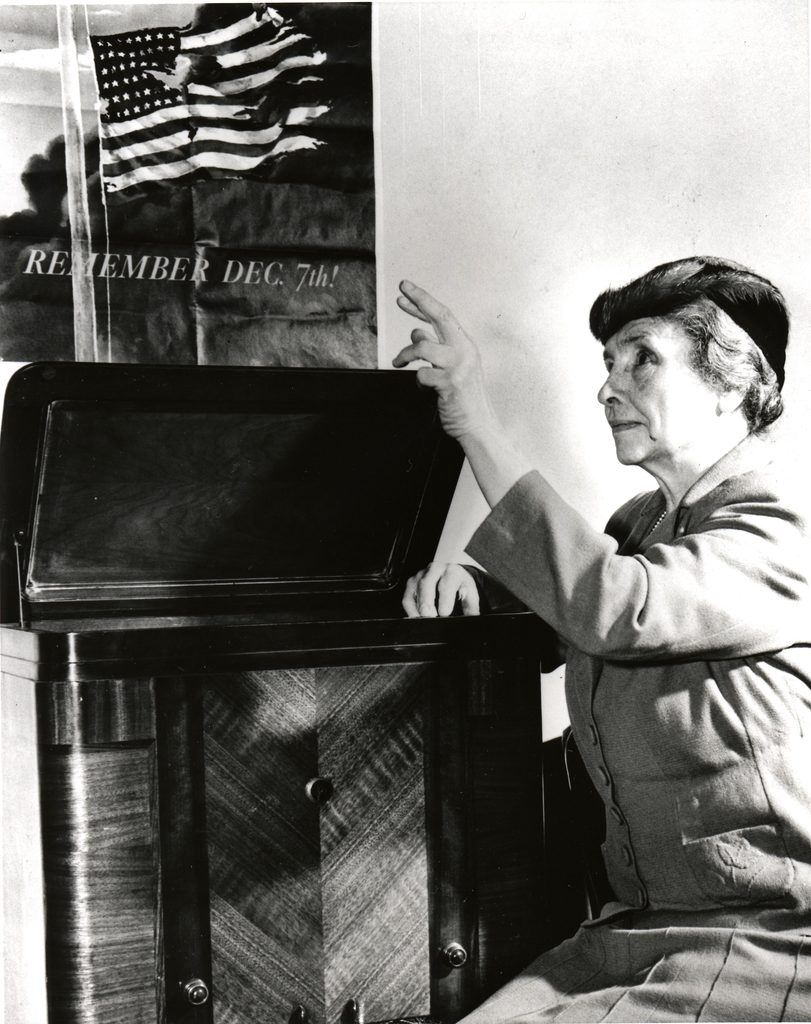
Helen is awarded the Gold Medal by the National Institute of Social Sciences given annually to a distinguished individual who has been of outstanding service to humanity.
Helen is honored by the world’s ambassadors to the United States at the Waldorf Astoria as she leaves on a world tour. She is called by Eleanor Roosevelt “America’s goodwill ambassador to the world.” She calls herself “an international beggar.”
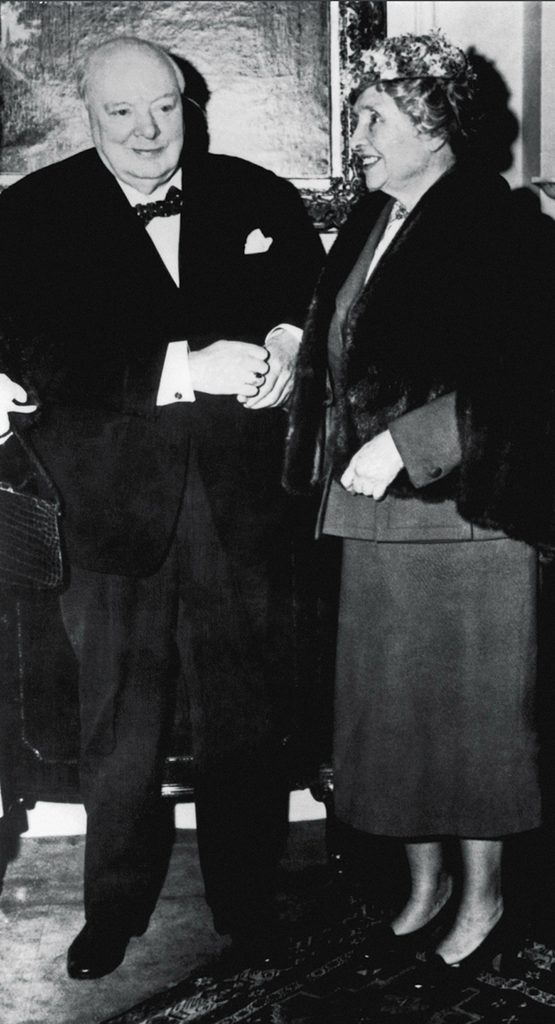
Helen meets with Winston Churchill who calls her “the most remarkable woman of our age.”
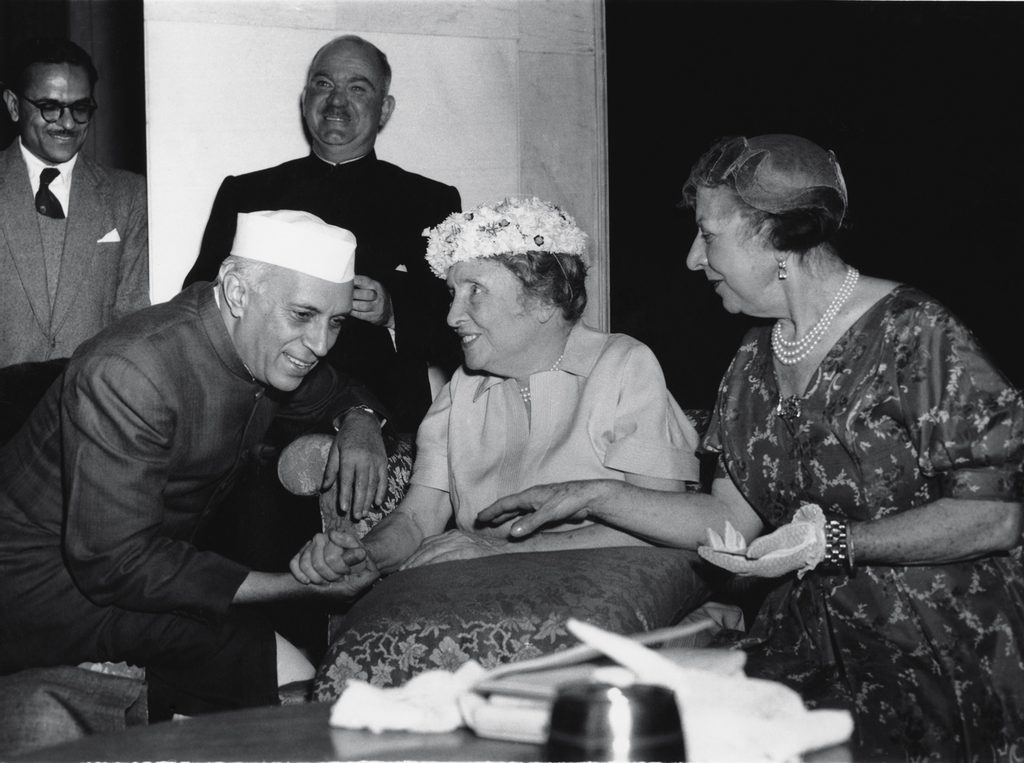
Helen meets with Prime Minister Nehru and is greeted by massive crowds on a tour of India.
Ivy Green, Helen’s birthplace in Tuscumbia, Alabama, U.S.A., is placed on the National Register of Historic Places.
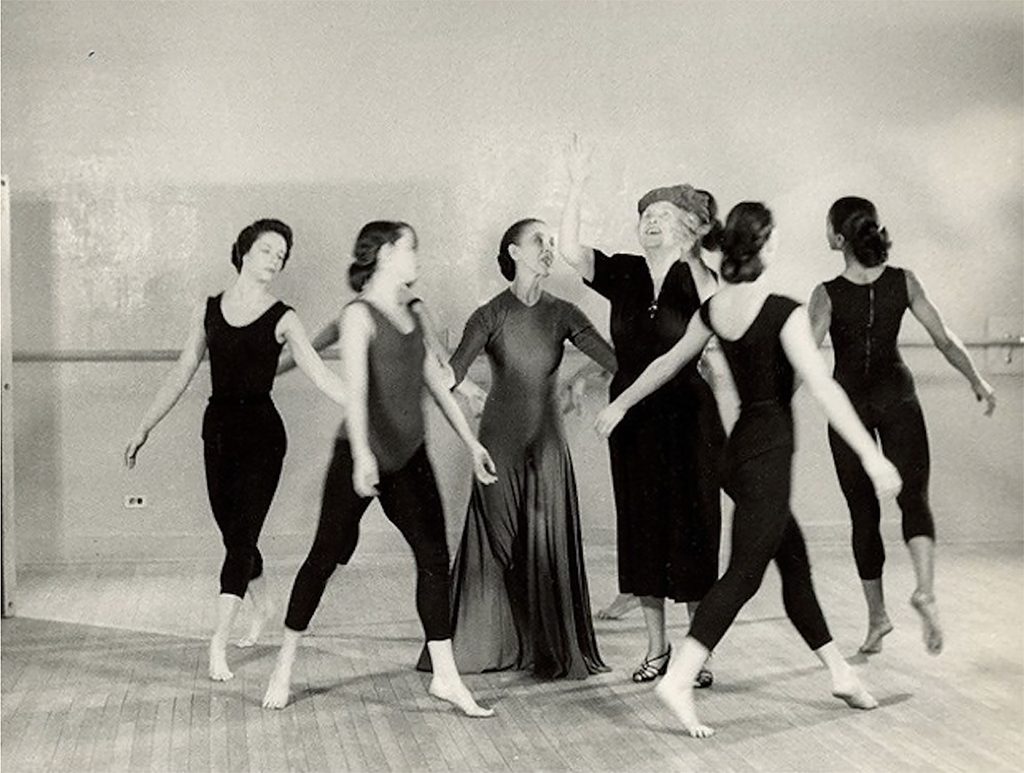
Helen, Martha Graham and dancers at Martha Graham’s studio, circa 1954. Scene from film Helen Keller In Her Story, produced by Nancy Hamilton.
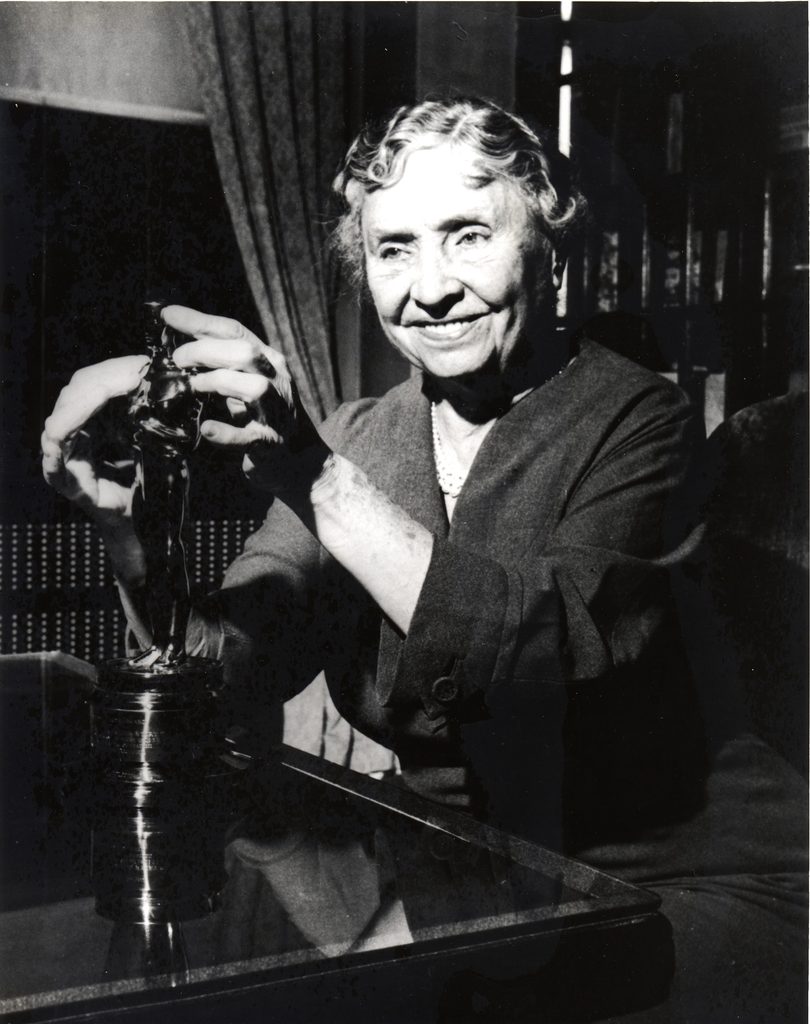
Helen wins an Oscar Award for Helen Keller In Her Story, a documentary movie on her life.
Helen publishes Teacher – Anne Sullivan Macy.
Helen becomes the first woman to receive an honorary doctorate degree from Harvard University.
Helen meets with President Eisenhower, who becomes the first non-blind person to use talking books during his convalescence from a heart attack. Helen pioneered the concept of talking books.
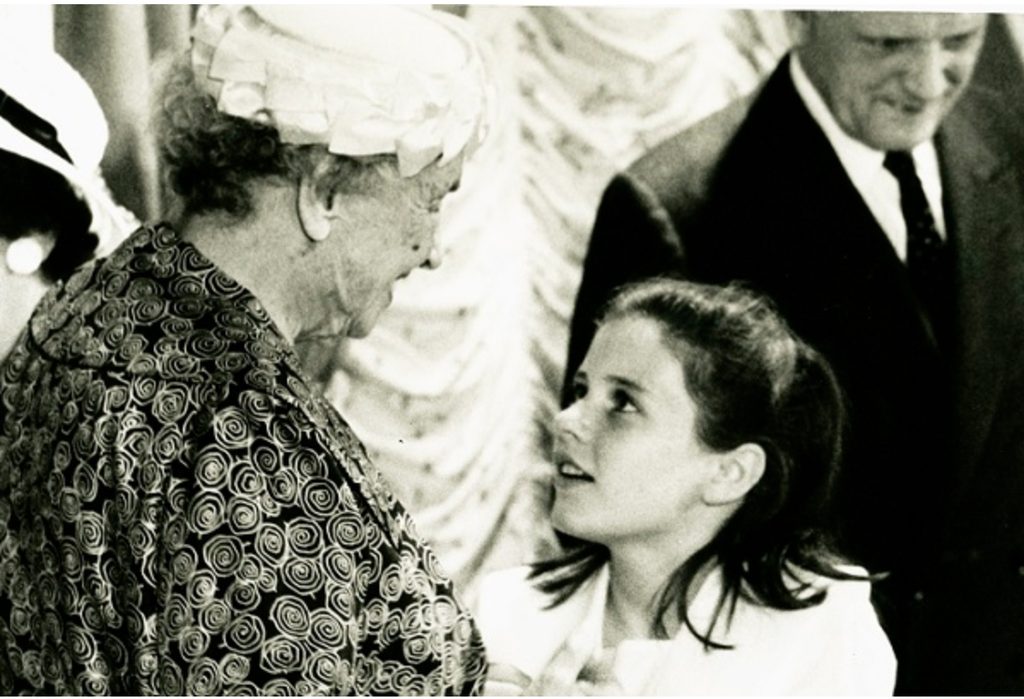
The Miracle Worker, the story of Helen’s early instruction by Annie Sullivan, debuts on Broadway, starring Patty Duke and Anne Bancroft.
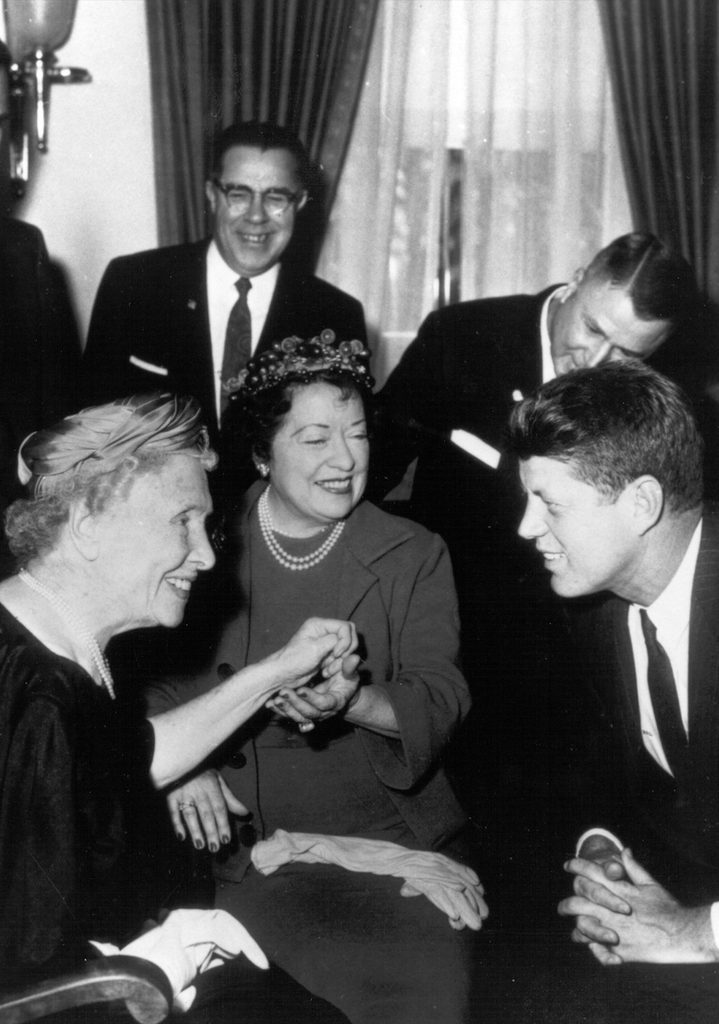
Helen meets with President John F. Kennedy, the tenth president of the United States with whom she will be personally acquainted.
Helen suffers a stroke and retires from public life. Nevertheless, she remains vibrant and interested in world affairs.
Helen is awarded the Presidential Medal of Freedom by President Lyndon Johnson. This is the highest civilian honor bestowed by the United States.
Two separate compilations of writings and speeches are published, Helen Keller; Her Socialist Years and The Faith of Helen Keller.
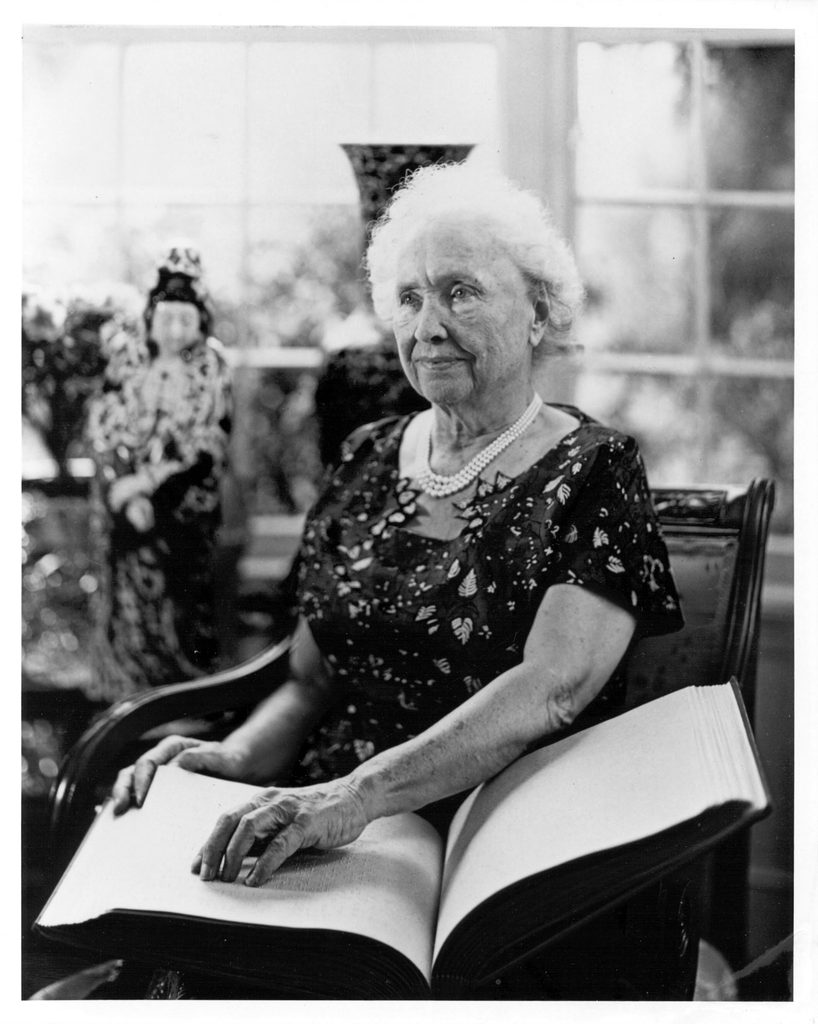
Helen Keller dies at age 88 and is memorialized at the National Cathedral, Washington, D.C. Senator Lister Hill of Alabama eulogizes her as “one of the few names not born to die.” She is called “the first lady of courage.” Helen Keller’s story continues to be taught in schools throughout the world. Numerous educational and service institutions continue her work under her name. The foremost of these is the American Foundation for the Blind, which she helped to establish.
American Foundation for Overseas Blind changes its name to Helen Keller International, the preeminent organization providing public health services to the blind and blindness prevention in developing countries worldwide.
The family of Helen Keller, and distinguished scientists and physicians, come together to establish the Helen Keller Eye Research Foundation, the only research organization bearing her name, to pursue her quest “to help me hasten the day when there shall be no preventable blindness.”
Life magazine calls Helen Keller one of the 25 most important Americans of the 20th century – a national treasure.
Gallop polls recurrently confirm that blindness is the most feared of all disabilities. The name “Helen Keller’ is preeminent in the struggle against blindness as are few names in other fields.
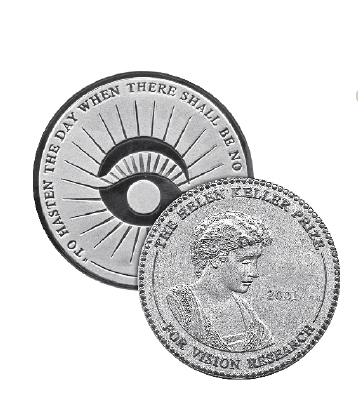
The Helen Keller Prize for Vision Research is established to bring public attention to vision research as a solution to sight loss.
The Helen Keller Eye Research Foundation appoints Ms. Keller Johnson, great-grand niece of Helen Keller, to develop and conduct a school education program based on the life and legacy of Helen Keller.
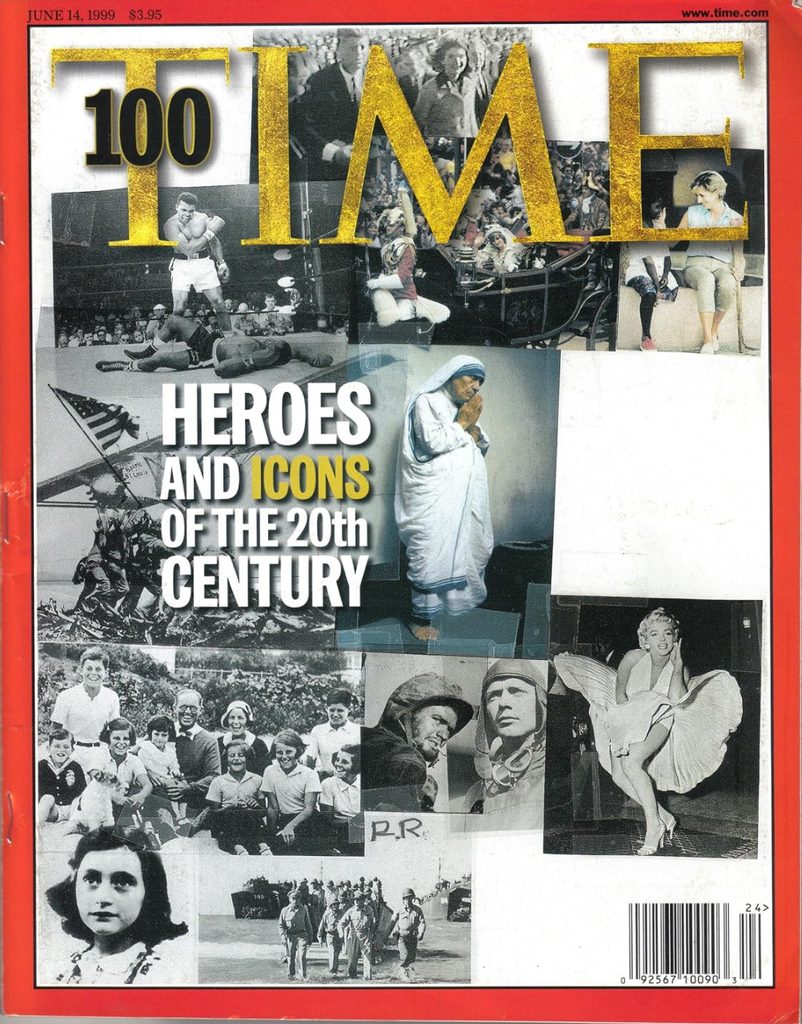
Time Magazine selects Helen Keller as one of the 100 most influential people of the 20th century.
The Helen Keller Eye Research Foundation begins sponsorship of the International Society of Ocular Trauma. The World Eye Injury Registry is established on the internet to help guide eye injury prevention and management worldwide.
The Helen Keller Birthplace Foundation is established to protect and maintain Ivy Green, her birthplace in Tuscumbia, AL.
The Helen Keller Eye Research Foundation changes its name to the Helen Keller Foundation for Research and Education – saving sight, speech and hearing. The Foundation now pursues new treatments for both major senses through research and education.
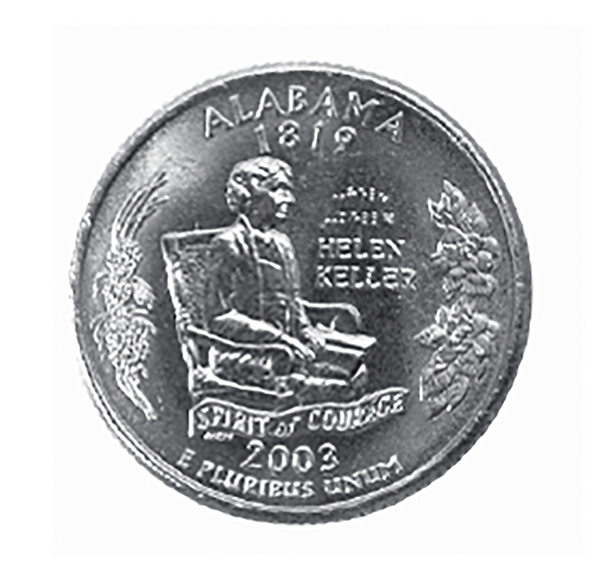
Helen Keller’s image is featured on the Alabama quarter. Her name is written in Braille, the first United States’ coin to feature Braille.
Movie Gallery features the foundation in its stores. Millions of customers support this alliance of Helen Keller’s legacy with solutions to blindness and deafness.
The Helen Keller Eye Research Foundation has discovered best treatments for retinal detachment, eye injury, diabetic eye disease, strokes of the eye, and surgery of the macula – the center of vision.
Alabama Governor Bob Riley and his wife, Patsy, unveil a statue of Helen Keller in the U.S. Capitol. The “miracle at the well” now represents Alabama as a beacon of hope.
The Helen Keller Foundation for Research and Education becomes the Helen Keller Eye Research Foundation with the education programs now being conducted under the newly formed Helen Keller Education Foundation, directed by Keller Johnson-Thompson.
The Helen Keller Eye Research Foundation launches the first ever clinical trial for retinal detachment prevention.
About the
Foundation
More of